What to draw / How to draw / Lettering & techniques
How to draw shadows
Sphere and cube with form shadow and cast shadow: 6 steps, about 15 minutes. Red lines are new in each step; grey lines are what you've already drawn.
Step 1 of 6
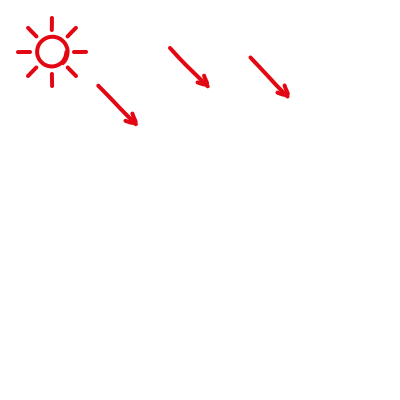
Mark the light source in the upper left, then draw three parallel arrows pointing the way the light travels. Every shadow in the picture has to agree with them.
· · Steps as a list
How to draw shadows, step by step
-
1 Step 1
Mark the light source in the upper left, then draw three parallel arrows pointing the way the light travels. Every shadow in the picture has to agree with them.
-
2 Step 2
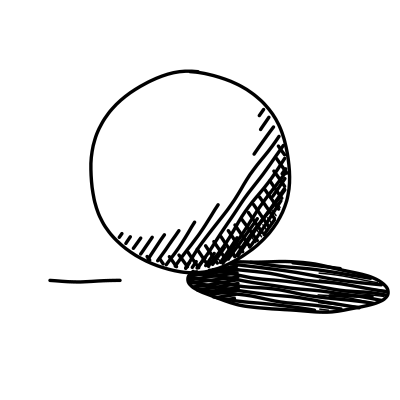
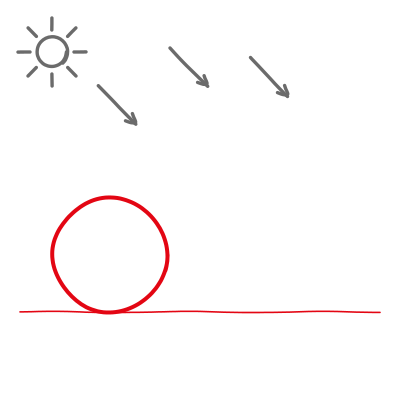
Draw a ground line, then a sphere resting on it, a circle that just touches the line at its bottom.
-
3 Step 3
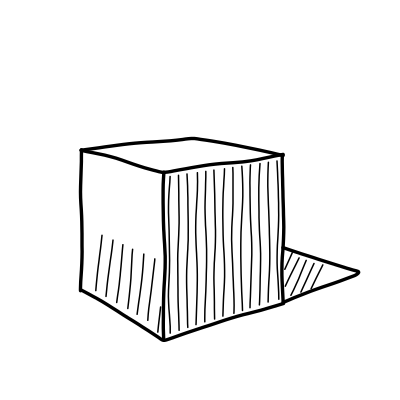
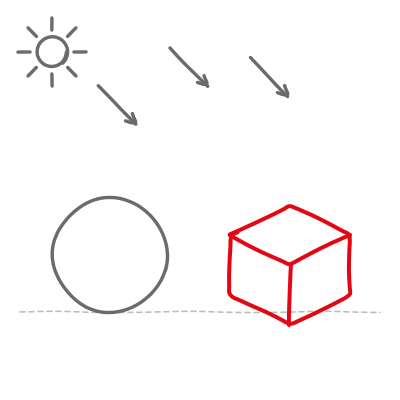
Draw a cube on the right in simple three-quarter view: a hexagon outline, then the three edges that meet at the front corner.
-
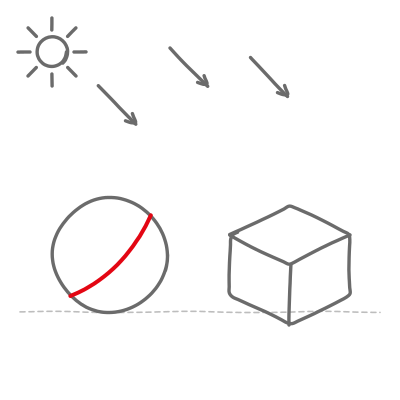
4 Step 4
Find the form shadow. On the sphere, draw a curved line from the upper right to the lower left, curving toward the shadow side. This is where the surface turns away from the light.
-
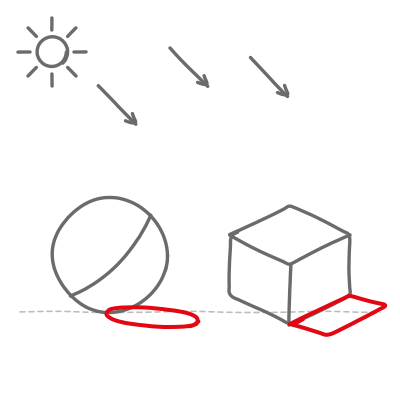
5 Step 5
Draw the cast shadows on the ground. The sphere casts a stretched oval away from the light; the cube casts a slanted parallelogram from its shaded edge.
-
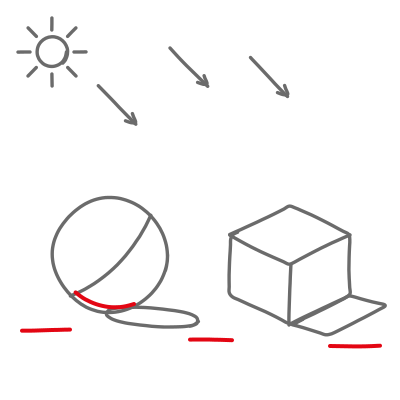
6 Step 6
Rub out the ground guide. Add a thin curved line of reflected light inside the shaded edge of the sphere, and a few short ground strokes under both objects.
-
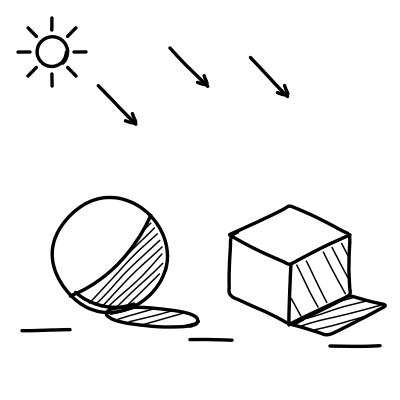
✓ Finished
Ink the lines you want to keep, erase the pencil, and add the shading strokes shown here on the side away from the light.
About this drawing
Shadows are what turn flat outlines into solid objects. There are only two kinds to learn: the form shadow, which is the dark side of the object itself, and the cast shadow it throws onto the ground. Pick one light source, keep it the same for everything, and the rest follows.
You need: Pencil (HB and 2B), eraser, paper. A blending stump is optional.
Tips
- Decide where the light is before you start, and mark it on the page. Every shadow in the drawing must follow from that one spot.
- Cast shadows go away from the light. A light on the upper left means shadows fall to the lower right.
- A cast shadow is darkest and sharpest where it touches the object. It softens and lightens as it moves away.
Common mistakes
- Shadows in two directions. If one object casts a shadow right and another casts left, the picture looks wrong. Check each shadow against the light arrows.
- Shading all of the dark side flat. Light bounces back from the ground, so leave a thin lighter band at the bottom edge of the shaded side.
Once you can draw it: 6 ideas to try
- Shadows on a sphere with a low, long evening light
- A row of cylinders casting long parallel shadows
- Shadows on a face lit from the side
- Hatching, cross-hatching and smooth blending compared on the same sphere
- An object lit from two directions with two shadows
- A cube seen from above with a short, overhead shadow
Want something random? Roll a drawing idea.
Questions
How do you draw shadows easy?
Choose a direction for the light, then shade the side of the object that faces away from it. Add a dark shape on the ground next to the object, on the side away from the light, so it looks as if the object is casting it.
How do you draw realistic shadows?
Use one light source consistently, add a form shadow that curves around the object, and a cast shadow that is darkest at the object's base and fades with distance. Leave a little reflected light on the shaded edge.
How do I draw shadows step by step?
Mark the light source, draw your objects, find the line where light turns to shadow, draw the cast shadows on the ground in the direction away from the light, and then fill them with hatching, darkest near the object.