What to draw / How to draw / Objects
How to draw a soccer ball
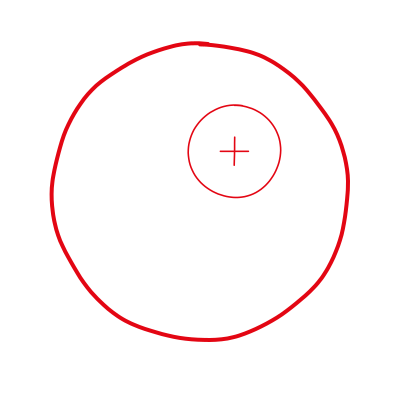
Classic ball, panels curving round the sphere: 8 steps, about 20 minutes. Red lines are new in each step; grey lines are what you've already drawn.
Step 1 of 8
Draw a large circle for the ball. Lightly mark a point a little above and right of the centre: the middle panel faces you there, because you are looking slightly down on the ball.
· · Steps as a list
How to draw a soccer ball (detailed), step by step
-
1 Step 1
Draw a large circle for the ball. Lightly mark a point a little above and right of the centre: the middle panel faces you there, because you are looking slightly down on the ball.
-
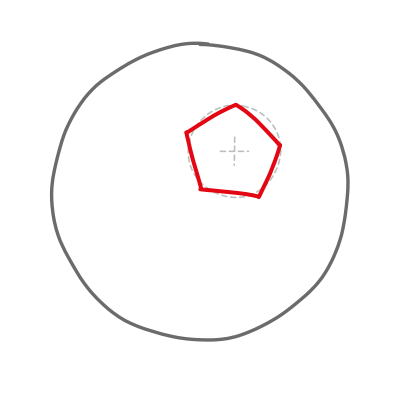
2 Step 2
Draw the centre pentagon around that point, its five corners touching the small guide circle. Keep its sides equal; it is the only panel you see face-on.
-
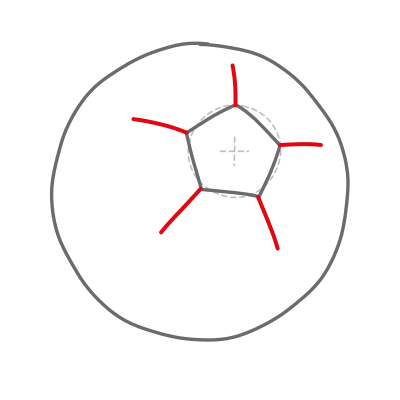
3 Step 3
From each corner of the pentagon, draw one short line straight outward. They are about as long as a pentagon side and point away from the centre like the spokes of a wheel.
-
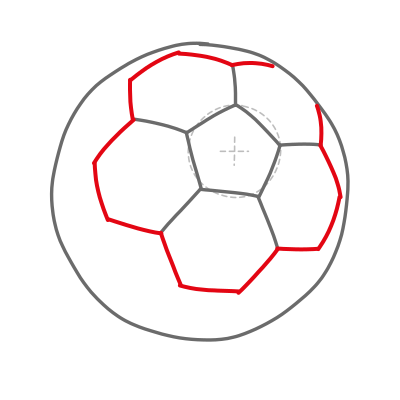
4 Step 4
Join the ends of neighbouring spokes with two short sides each, so five hexagons form a ring around the pentagon. The hexagons further from the centre look squashed, because the ball curves away.
-
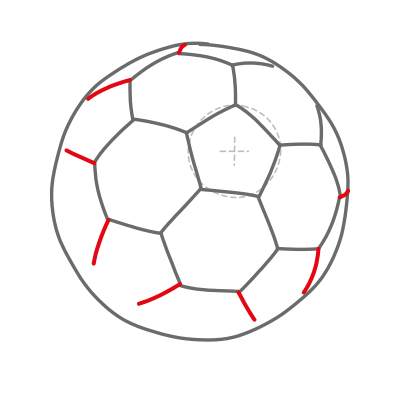
5 Step 5
Draw the next ring: five more pentagons sit in the notches between the hexagons. Near the edge of the ball they get thinner and lean along the curve.
-
6 Step 6
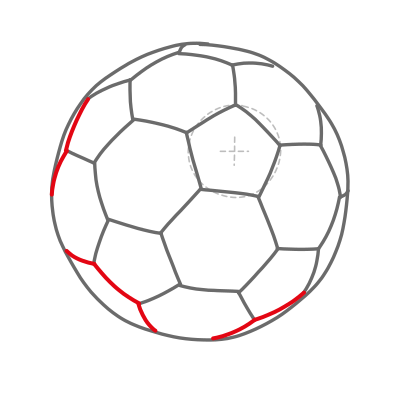
Finish the pattern out to the edge. Every line that reaches the circle stops there; the panels just disappear round the back. Bend these outer lines slightly so they follow the ball's curve.
-
7 Step 7
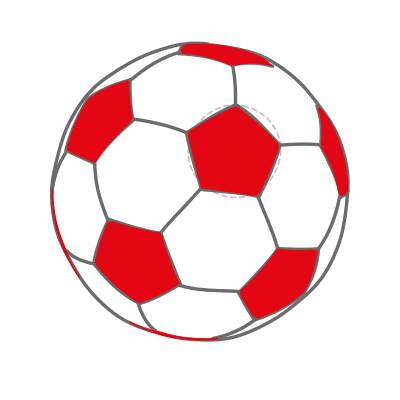
Colour in every pentagon solid black, including the slivers cut off by the edge. The hexagons stay white. Check the pattern: each pentagon touches only hexagons.
-
8 Step 8
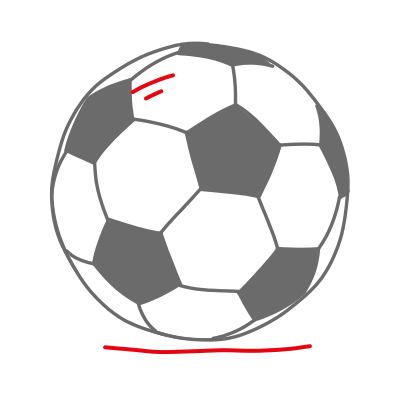
Erase the guides. Add two short curved lines in the white panel near the top left for the shine, and a flat line on the ground under the ball.
-
✓ Finished
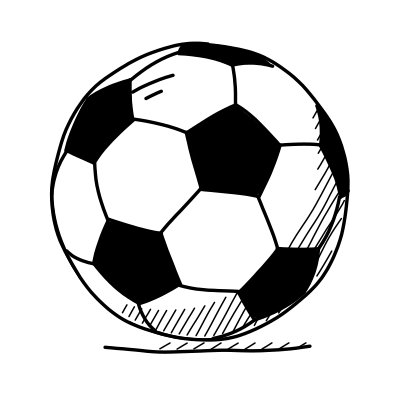
Ink the lines you want to keep, erase the pencil, and add the shading strokes shown here on the side away from the light.
How to draw a soccer ball (easy), step by step
-
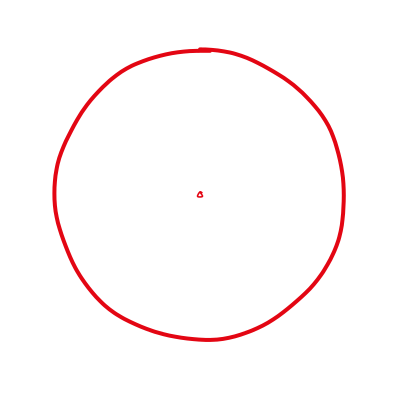
1 Step 1
Draw a big circle. Put a light dot in the exact centre.
-
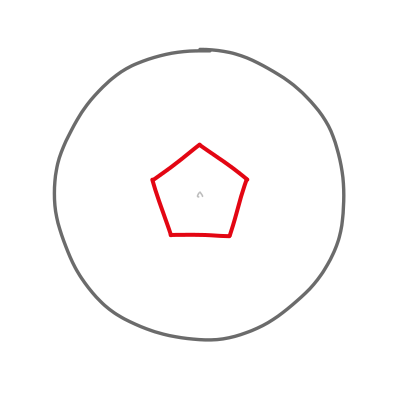
2 Step 2
Draw a pentagon around the dot, about a third as wide as the ball, with one point at the top.
-
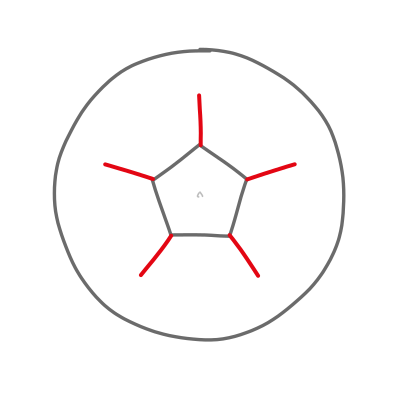
3 Step 3
From each corner, draw a straight line outward, about as long as one side of the pentagon.
-
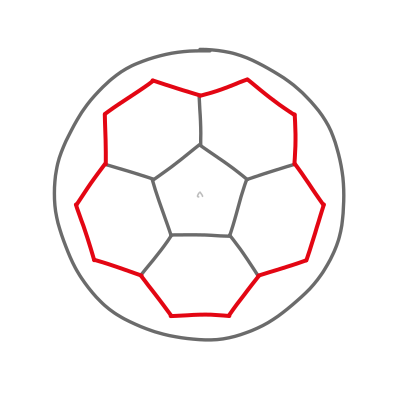
4 Step 4
Join the spokes into a ring of five hexagons. Each hexagon has six sides: one shared with the pentagon, two spokes and three new lines.
-
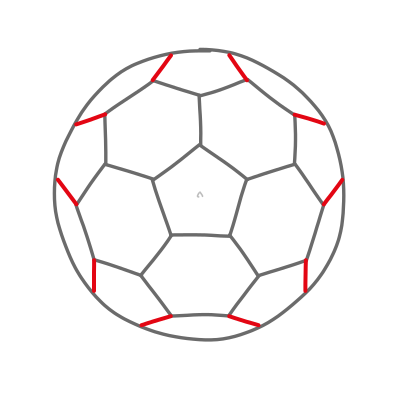
5 Step 5
Each V-shaped gap between two hexagons is the top of another pentagon. Draw its two short sides out to the circle; the edge of the ball cuts off the rest.
-
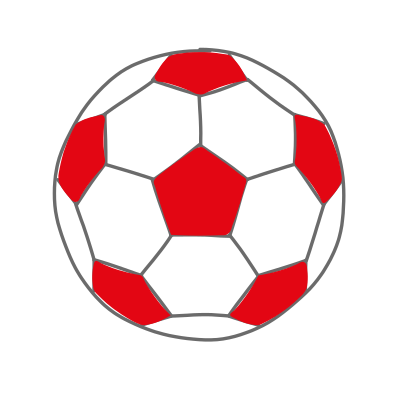
6 Step 6
Erase the dot and colour every pentagon black, including the bits cut off by the edge.
-
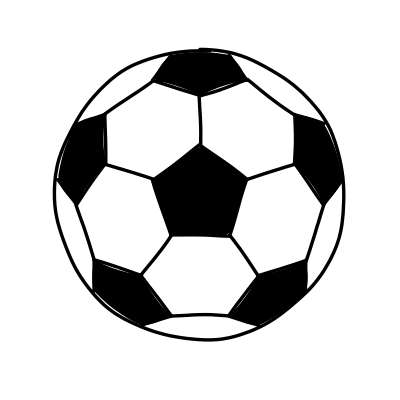
✓ Finished
Go over the lines you want to keep with a pen or a darker pencil, then erase any leftover guides.
About this drawing
A classic soccer ball is made of 12 black pentagons and 20 white hexagons, and every pentagon is surrounded only by hexagons. You never need to plan the whole pattern: draw one pentagon facing you, grow a ring of hexagons around it, and the next pentagons appear by themselves in the gaps. The only other thing to get right is the curve: panels near the edge get squashed and lean along the outline, which is what makes the circle read as a ball.
You need: Pencil, eraser, paper. A compass or round lid helps for the circle. A black marker or soft pencil for the pentagons.
Tips
- Start with one pentagon about a third of the ball's width. Too small and the pattern needs too many rows; too big and you only fit one ring.
- Every pentagon corner sends out one spoke, and every spoke ends where two hexagons and a pentagon meet. If three lines don't meet at a corner, something is off.
- Panels shrink and flatten as they approach the edge. Draw the outer ones narrower and curve their lines to follow the circle.
- For a ball seen slightly from above, put the centre pentagon a little above the middle of the circle.
- Fill the pentagons last. If one would touch another pentagon, the pattern has gone wrong; fix the lines before you blacken anything.
Common mistakes
- Pentagons next to pentagons. On a real ball each pentagon is surrounded by five hexagons. Count the sides of the white panels: they should all have six.
- A flat grid of hexagons. Drawn the same size all the way to the edge, the panels make a flat disc. Shrink and squash them toward the outline.
- Lines that cross the outline. The pattern wraps round the back, so every seam stops at the edge of the circle.
- A wobbly circle. Everything else depends on it. Trace a lid or use a compass, then draw over it freehand if you want a softer line.
Once you can draw it: 6 ideas to try
- A ball in the back of a net, the mesh pressing into one side
- A ball resting on a grass pitch beside a white painted line
- A ball in mid-air with motion lines, spinning so the pattern blurs on one side
- An old leather ball with long laced panels instead of pentagons and hexagons
- A player's foot just about to kick the ball, seen from low down
- A worn, scuffed ball in a puddle with its reflection underneath
Want something random? Roll a drawing idea.
Questions
How do you draw a soccer ball easy?
Draw a circle and a pentagon in the middle with one corner at the top. Draw a short straight line out from each corner, join the lines into five hexagons around the pentagon, then add the pentagon shapes that fit in the gaps between the hexagons at the edge. Colour the pentagons black.
How many pentagons and hexagons are on a soccer ball?
A classic ball has 12 pentagons and 20 hexagons, 32 panels in all. From any one view you see about six pentagons, some of them cut off by the edge.
Why does my soccer ball look flat?
Usually because the panels near the edge are as big as the ones in the middle. Make them narrower as they approach the outline, curve their lines along the circle, and add a little shading on the side away from the light plus a shadow on the ground.
How do I draw a soccer ball in perspective?
Move the pentagon that faces you off-centre in the direction the ball is turned. Panels on the near side get bigger and rounder, panels on the far side get thinner and crowd toward the edge. The outline stays a perfect circle from any angle.