What to draw / How to draw / Nature
How to draw the ocean
Seascape with horizon, waves and a distant sailboat: 8 steps, about 15 minutes. Red lines are new in each step; grey lines are what you've already drawn.
Step 1 of 8
Draw a long, level horizon line about halfway up the page. Everything else is measured against it, so keep it perfectly straight and add a light frame box around the scene.
· · Steps as a list
How to draw the ocean, step by step
-

1 Step 1
Draw a long, level horizon line about halfway up the page. Everything else is measured against it, so keep it perfectly straight and add a light frame box around the scene.
-
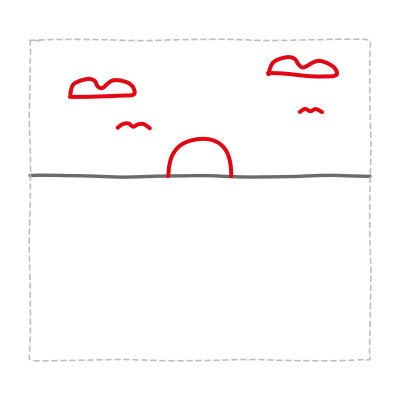
2 Step 2
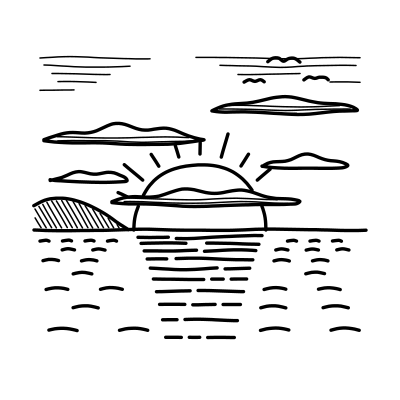
Add the sun low on the horizon and a few clouds. Clouds are flat on the bottom and bumpy on top; gulls are two small curved strokes.
-
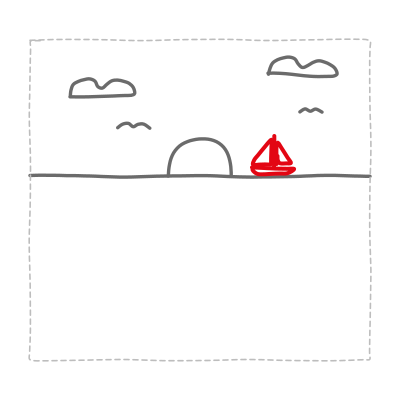
3 Step 3
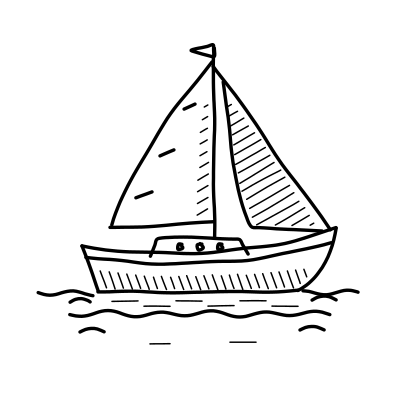
Place a small sailing boat on the horizon, to the right. Distant objects are tiny: a hull, a mast and two triangle sails sitting right on the line.
-
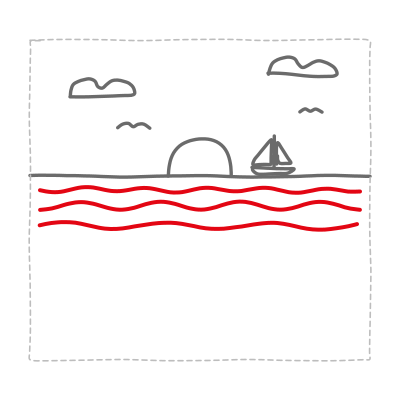
4 Step 4
Draw the far water: thin, nearly flat wavy lines stacked close together. Space them a little wider apart as they come toward you and make each wave slightly taller.
-
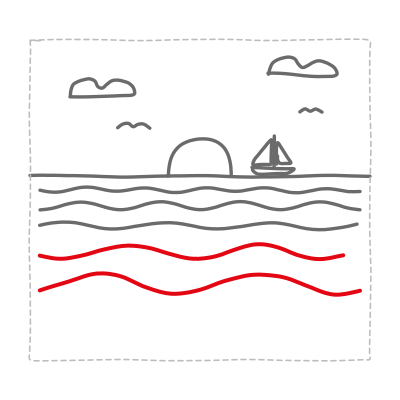
5 Step 5
Add the middle waves. Now the swells are bigger and the troughs between them are deeper. Keep the line of each wave rolling gently rather than zigzagging.
-
6 Step 6
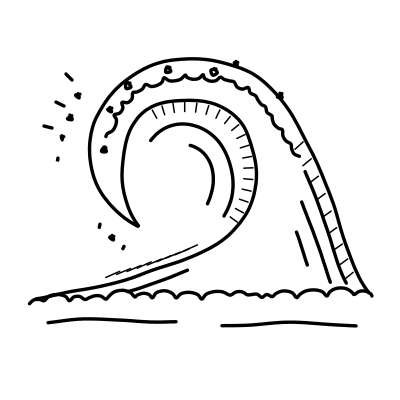
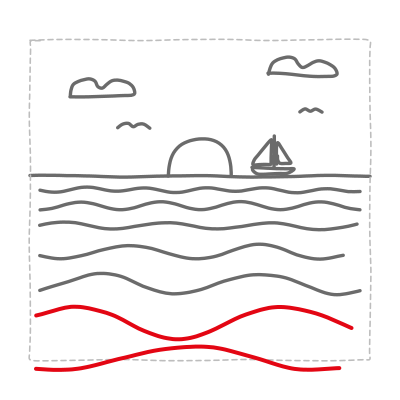
Draw the big foreground wave. It rolls higher and wider than the rest, with its crest curling over at the top.
-
7 Step 7
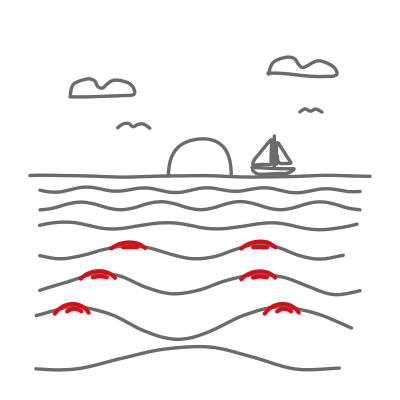
Add whitecaps: small curved hooks along the top of each wave, bigger and bolder in the foreground. Erase the frame and any guides.
-
8 Step 8
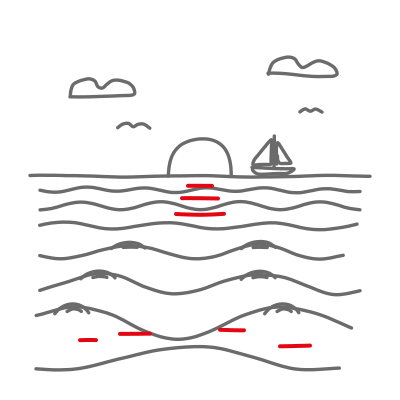
Finish with short horizontal dashes as foam and a few sun reflections on the water below the sun.
-
✓ Finished
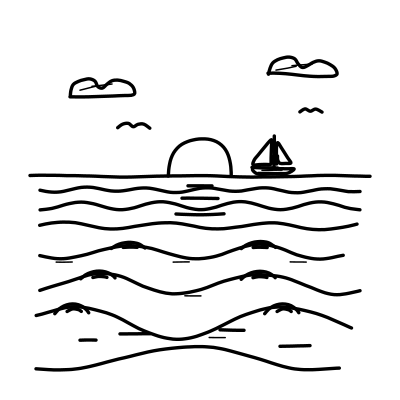
Ink the lines you want to keep, erase the pencil, and add the shading strokes shown here on the side away from the light.
About this drawing
An ocean drawing works because of one rule: things get bigger and farther apart as they come toward you. Waves near the horizon are thin, flat dashes; waves in the foreground are tall and curl over. Add a boat on the horizon, and the whole scene reads as deep water.
You need: Pencil, eraser, paper, ruler for the horizon if you like.
Tips
- Put the horizon at the middle or lower. A high horizon makes more sea, a low one makes more sky.
- Make wave lines longer and farther apart as they come forward. Equal spacing flattens the picture.
- Leave blank paper for the foam and sun glints. White is the lightest tone, so draw around it.
Common mistakes
- Same-size waves everywhere. Waves near the horizon should be tiny strokes, only the foreground gets big shapes.
- Slanted horizon. Even a slight tilt looks like the water is draining off the page. Use a ruler or the page edge to check it.
Once you can draw it: 5 ideas to try
- A stormy ocean with dark clouds and tall breaking waves
- A moonlit sea with a path of light on the water
- A rocky coast with waves crashing into spray
- A lighthouse on a cliff above the sea
- A big wave seen from below, curling over you
Want something random? Roll a drawing idea.
Questions
How do you draw the ocean easy?
Draw a straight horizon line, then rows of wavy lines below it, spaced further apart toward the bottom of the page. Add a small boat on the horizon and a few curved whitecaps on the crests.
How do you draw a realistic ocean?
Use perspective: tiny, flat waves at the horizon, larger and darker swells in front. Shade the sides of the waves facing away from the light, leave the crests white, and add reflections of the sky in the troughs.
How do you draw the ocean step by step?
Draw the horizon, add the sun and clouds, place a small boat, then draw rows of waves from far to near, add the big foreground wave and finish with whitecaps and foam.